[Case 04]

25% Growth in Checkout Completion

Food
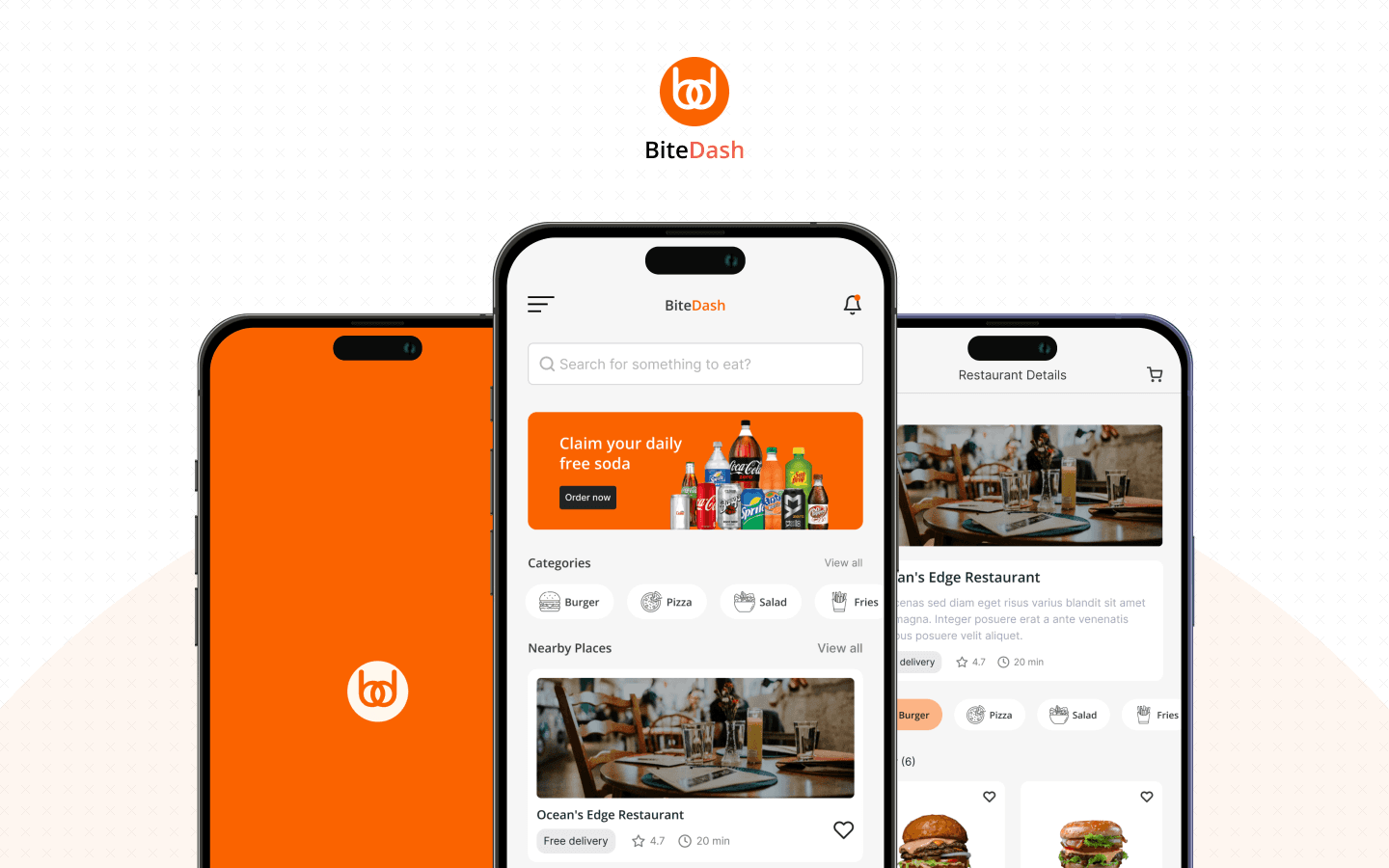
Bite Dash โ€” Simplifying Restaurant Ordering

Boosting Conversion Rates for Checkout

[Project Overview]

Bite Dash is a food ordering mobile app designed from scratch for an Italian restaurant owner. The goal was to create a fast, frictionless ordering experience that makes it easy for first-time users to browse the menu, customize orders, and check out in under a minute.

[Problem Statement]

  • Slow Ordering: Customers were calling the restaurant to place orders because the previous ordering process was too complicated.

  • Cart Abandonment: Users were adding items but dropping off at checkout due to a confusing multi-step payment flow.

  • First-Time User Confusion: New users couldn't figure out how to customize orders (toppings, sizes, special requests) without getting frustrated.

[Industry]

Food

[My Role]

Lead Designer

[Platforms]

IOS and Android

[Timeline]

January 2024- March 2024

[Persona]

Marco Rossi

University Student

Marco is a busy student who orders food 3โ€“4 times a week. He wants to browse quickly, pick what he likes, and checkout without thinking.

Age: 22

Location: Milan, Italt

Tech Proficiency: Moderate

Gender: Male

[Goal]

Order Fast: Browse the menu and checkout in under 2 minutes.

Easy Customization: Add toppings or special requests without navigating multiple screens.

No Friction: Order as a guest without being forced to create an account.

[Frustrations]

Too Many Steps: "I just want to order a pizza. Why do I need 5 screens to do that?"

Forced Sign-Up: "I close the app if it makes me create an account before I can even see the menu."

Confusing Checkout: "I added items but couldn't figure out how to apply a promo code.

[Process]

[01] User Research

Conducted interviews with 10 regular restaurant customers to understand ordering habits and pain points.

Analyzed competitor apps (UberEats, Deliveroo, Glovo) to identify best practices for checkout flows.

Mapped the existing ordering journey and identified the biggest drop-off point at checkout.

[01] User Research

Conducted interviews with 10 regular restaurant customers to understand ordering habits and pain points.

Analyzed competitor apps (UberEats, Deliveroo, Glovo) to identify best practices for checkout flows.

Mapped the existing ordering journey and identified the biggest drop-off point at checkout.

[01] User Research

Conducted interviews with 10 regular restaurant customers to understand ordering habits and pain points.

Analyzed competitor apps (UberEats, Deliveroo, Glovo) to identify best practices for checkout flows.

Mapped the existing ordering journey and identified the biggest drop-off point at checkout.

[02] Insights

Users wanted to see the full menu immediately without signing up first.

Customization needed to happen on the same screen as the item โ€” not on a separate page.

One-page checkout with saved address and payment options dramatically reduced abandonment in competitor apps.

[02] Insights

Users wanted to see the full menu immediately without signing up first.

Customization needed to happen on the same screen as the item โ€” not on a separate page.

One-page checkout with saved address and payment options dramatically reduced abandonment in competitor apps.

[02] Insights

Users wanted to see the full menu immediately without signing up first.

Customization needed to happen on the same screen as the item โ€” not on a separate page.

One-page checkout with saved address and payment options dramatically reduced abandonment in competitor apps.

[03 Design Solution]

Designed a guest-first flow โ€” users can browse and add items without creating an account.

Built an inline customization system where toppings, sizes, and special requests appear on the same item card.

Created a single-screen checkout with address, payment, and order summary all visible at once.

[03 Design Solution]

Designed a guest-first flow โ€” users can browse and add items without creating an account.

Built an inline customization system where toppings, sizes, and special requests appear on the same item card.

Created a single-screen checkout with address, payment, and order summary all visible at once.

[03 Design Solution]

Designed a guest-first flow โ€” users can browse and add items without creating an account.

Built an inline customization system where toppings, sizes, and special requests appear on the same item card.

Created a single-screen checkout with address, payment, and order summary all visible at once.

[04] Testing & Iteration

Conducted usability testing with 8 users on the prototype to validate the checkout and customazition flow.

Reduced checkout from 4 screens to 1 based on testing feedback.

Added a persistent cart summary bar at the bottom so users always know their total.

[04] Testing & Iteration

Conducted usability testing with 8 users on the prototype to validate the checkout and customazition flow.

Reduced checkout from 4 screens to 1 based on testing feedback.

Added a persistent cart summary bar at the bottom so users always know their total.

[04] Testing & Iteration

Conducted usability testing with 8 users on the prototype to validate the checkout and customazition flow.

Reduced checkout from 4 screens to 1 based on testing feedback.

Added a persistent cart summary bar at the bottom so users always know their total.

[Outcome]

45K+ Downloads After Launch
30% reduction in cart abandonment on mobile devices.
40% improvement in perceived ease of use, as measured by post-launch surveys.

[Key Learnings]

Simplification is key

Users value a quick and easy process, especially on mobile.

Simplification is key

Users value a quick and easy process, especially on mobile.

Simplification is key

Users value a quick and easy process, especially on mobile.

Iterative testing pays off

Regular testing uncovered hidden issues and ensured the design met user needs.

Iterative testing pays off

Regular testing uncovered hidden issues and ensured the design met user needs.

Iterative testing pays off

Regular testing uncovered hidden issues and ensured the design met user needs.

Details matter

Small improvements, like error validation and mobile optimization, had a significant impact.

Details matter

Small improvements, like error validation and mobile optimization, had a significant impact.

Details matter

Small improvements, like error validation and mobile optimization, had a significant impact.

Select this text to see the highlight effect

Create a free website with Framer, the website builder loved by startups, designers and agencies.